By Menuka Wijesinghe
Soft power, a relatively new concept coined by Joseph Nye in the late 1980s, is the state’s ability to influence and shape another’s preferences and values through attraction and persuasion rather than coercion or force. In current international relations discourse, it is evident that global powers such as China and emerging powers like South Korea and Japan are using this element of power. In contrast, Russia, a revisionist power seeking a higher standing in the global power hierarchy, is not tapping into it. From world-class literature, music, and ballet to scientific achievements and a rich historical legacy, Russia possesses significant sources of soft power but has struggled to translate these assets into sustained international attraction. This article hopes to examine the reasons for underutilized Russian soft power and how the prioritization of hard power undermines and is detrimental to its ability to project its influence in the increasing global competition.
Russia’s Untapped Cultural Wealth
Russia, the beacon of both intellectual and cultural achievement, with the works of the greatest writers, including Tolstoy, Dostoevsky, and Pushkin, who contributed to shaping global literature, as well as the artistic excellence of pioneering composers such as Tchaikovsky and Stravinsky in ballet, has not grappled with the gravity of the lack of integration of such cultural resources into its foreign policy agendas. Then, the Soviet legacy in terms of space exploration, sports, and the Russian language are the other avenues of opportunity yet to be explored.
However, in the contemporary situation, it is evident how nations such as South Korea, through the K-Wave, and China, via the Confucius Institutes, promote their culture and language, whereas Russian culture is hardly visible, shaping global perceptions. This limited visibility reflects not simply the abundance of competing cultural powers, but also Russia’s difficulty in developing a coherent strategy that converts its cultural resources into sustained international engagement. Despite the efforts of the Rossotrudnichestvo, or RT (Russia Today), to negate the negative image of Russia put forward by the West, it is more inclined towards the political aspect than portraying cultural values. Therefore, the soft power initiatives are overshadowed by military statecraft.
Overemphasis on Hard Power
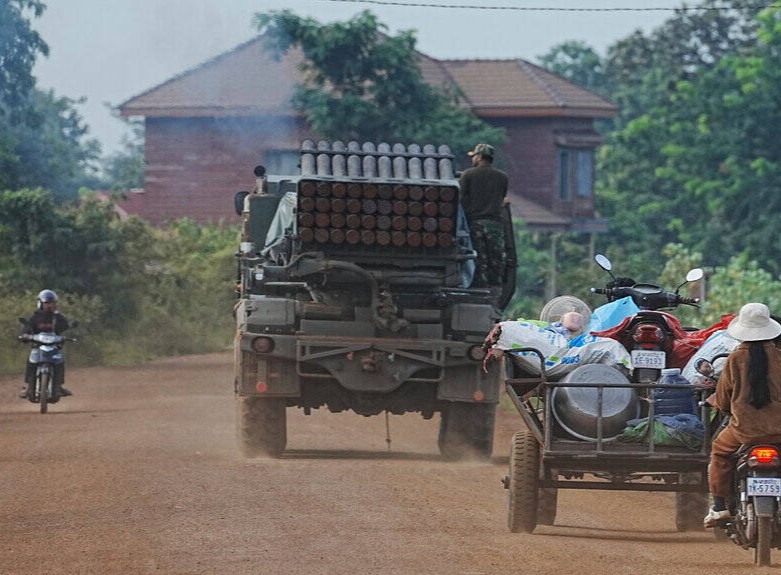
Throughout history up until now, even in the situation in the Arctic, it is apparent that the main priority is given to militarization and geopolitical influence in Russia’s foreign policy. From the times of the USSR to recent Russian interventions in both Georgia (2008) and Ukraine (2014, 2022), this further confirms the above stance. As a veto power, Russia has been relying on its hard power to assert its position and power on the global stage of power politics. This overemphasis on power projection can erode the trust and credibility of Russia, as it is viewed as an aggressive player. This hard power-first ideology undermines its chance of developing an attractive image to international audiences. It is evident how small states maintain a good, cordial relationship with Russia for their survival, yet that relationship is mainly due to Russia’s projection of itself as the counterweight to Western dominance. Hence, all in all, it’s about their military power, not a genuine engagement.
Education, Language and Media
Education is another area where Russia underutilizes soft power. The Russian language, once used to exert its influence all over Central Asia, has lost its color and impact. Despite being a powerful nation, Russia has not been able to invest in the Russian language, whereas other languages such as English, Mandarin, and Korean are growing while establishing global recognition for them.
Although Russia provides scholarships to students from Africa, Asia, and Latin America, their potential as long-term sources of influence depends on sustained alumni networks, institutional partnerships, and professional exchanges beyond their period of study. By which Russia reconstruct its global image by replacing the military image with a more appealing one.
To counterattack the Western perspectives of Russia, RT and Sputnik play a vital role. Yet the sole purpose of the latter is to provide their narrative while dismissing Western ideologies rather than portraying their legitimate cultural or journalistic initiatives. Due to the heavy reliance on countering, Western Russia is losing its opportunity to use the media as a source of soft power to create a global appeal.
Structural and Strategic Barriers
In addition to the above reasons, there are several structural and strategic barriers that hinder Russia’s soft power. The authoritarian image of Russia that has been painted is never properly negated by the Russian government, which further fuels the international perspective of Russia as an aggressive nation. Furthermore, the ongoing conflicts with Ukraine and the Russian presence in the Arctic confirm the Western perceptions and provide cogent evidence for it. Although Russia has a strong economy with a strong GDP, it lacks diversification and a focus on consumer-driven markets. Then, the Russian cultural houses that are in foreign missions are not very visible, like the Goethe Institutes and Confucius Institutes. Therefore, through the reforms, such structural limitations could be avoided.
In conclusion, today’s world influence is not merely restricted to tanks, pipelines, or missiles but rather the legitimate welcome from people who have embraced the culture of a certain state. Soft power is succeeding solely because of the lack of coercion. Unless Moscow develops a credible strategy that separates cultural and educational engagement from coercive statecraft, its considerable cultural resources will continue to generate far less international attraction than their potential suggests. To effectively secure its position in the international system, Russia must minimize its assertive means of power projection while adopting more openness, credibility, and engagement. Then it would be able to gain admiration from the world for its cultural heritage that is currently restricted to itself.
Menuka Yasanjali Wijesinghe is a graduand of the University of Colombo, where she majored in International Relations. She is also a second-year student at Sri Lanka Law College.
Factum is an Asia Pacific-focused think tank/consultancy on Diplomacy, Tech-Plomacy, Digital and Energy Futures accessible via www.factum.lk.
The views expressed here are the author’s own and do not necessarily reflect the organization’s.