By Nazia Afrin Monami
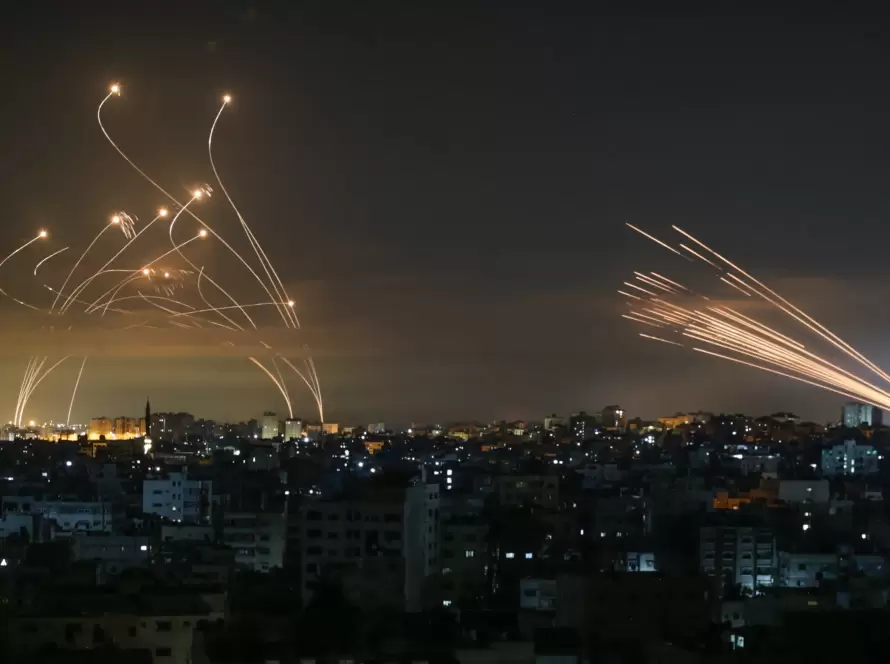
On 28 February 2026, the United States and Israel launched strikes on Iran killing Supreme Leader Ali Khamenei in the opening hours of a conflict that is being described as the largest global supply disruption since the 1970s energy crisis. Tehran retaliated. The Strait of Hormuz, through which roughly a fifth of the world’s traded oil passes, was shut. That narrow corridor of water, fully open the day before the strikes began, suddenly became a choke point with consequences that reached all the way to a petrol pump in Motijheel, Dhaka. The distance between those two points, between a precision strike on a compound in Tehran and a motorcycle idling in an April queue, is not geographical. It is structural. It is the distance that Bangladesh’s import-dependent energy architecture has always placed between a faraway crisis and an ordinary morning commute.
The weeks that followed saw the conflict metastasise rather than resolve. As NPR reported, mediators from Pakistan, Egypt, and Turkey worked frantically on ceasefire proposals that each side rejected in turn. Iran refused a temporary pause, arguing it would only give Washington and Tel Aviv time to regroup, and instead demanded a permanent end to the war with guarantees against future attacks. The US called Tehran’s counter-proposal “significant but not good enough.” And through all of it, as Al Jazeera and NPR both reported, Israel kept striking – hitting Iran’s South Pars petrochemical facility on 6 April even as mediators were distributing draft proposals, with Israeli Defence Minister Israel Katz confirming what he called a strike on the largest petrochemical complex in the country. Prime Minister Netanyahu said publicly that Israel was “stepping up” its attacks, not pausing them. The ceasefire being negotiated in Islamabad and Cairo seemed, from Tehran’s vantage point, to be happening on a different planet from the war being waged over its skies. This is a pattern that students of the region will recognise: diplomatic channels running in parallel with military escalation, each side using the threat of further destruction as a bargaining chip while the costs accumulate elsewhere – in Gulf shipping lanes, in Rotterdam futures markets, and in the price of octane in Bogura.
Then on 8 April, President Trump announced a two-week ceasefire, mediated by Pakistani Prime Minister Shehbaz Sharif, stepping back from his threat to bring about “complete demolition” of Iranian infrastructure. Both the US and Iran indicated it was temporary, not a cessation of hostilities but a pause for talks, with the Strait of Hormuz’s reopening as a central condition. Whether it holds, and whether Israel, which signed on but has a documented history of continuing operations through prior truces, observes it, remains the defining uncertainty of the coming fortnight. A two-week window is meaningful only if it translates into resumed shipping. And even then, the pipeline from tanker to refinery to pump takes weeks, not days, to normalise. The Strait, for now, remains the question. And in Dhaka, the queue remains at the pump.
Bangladesh does not sit on significant crude reserves of its own. It imports, refines, and distributes – a chain whose every link depends on uninterrupted maritime passage. The country imported about 62 lakh tonnes of fuel oils in 2024–25, of which about 63 per cent was diesel and 12 per cent was petrol and high-octane petrol, as New Age reported. That degree of import dependency is not an accident of geography but a consequence of decades of underinvestment in domestic energy infrastructure – a strategic vulnerability that policymakers have acknowledged in reports and conferences while the underlying exposure compounded quietly. When that passage is threatened, the chain buckles. And when the chain buckles, you feel it at the pump.
According to Prothom Alo, the state-owned Eastern Refinery Limited in Chattogram imports 1.5 million tonnes of crude oil annually from the UAE and Saudi Arabia, producing petrol, diesel, furnace oil, and other fuels. And due to the ongoing war, those imports have been halted. Private refineries that process condensate and naphtha are not faring much better. The MD of Super Petrochemical told Prothom Alo that raw material supplies are secured to maintain production through April and May, but that supplies for June are not yet available, making production for that month uncertain. The ceasefire, if it holds, buys exactly that much time and no more. June is not a deadline on a diplomatic calendar. It is the month the lights may begin going out.
What makes the current crisis especially maddening is that it has been simultaneously real and artificially amplified. Two distinct problems that have fused into one and proved difficult to disentangle. Prothom Alo reported that average daily demand for octane in the last fiscal year was about 1,100 tonnes – a figure that more than doubled to over 2,000 tonnes between 1 and 4 March, driven almost entirely by panic buying. BPC data cited by the same publication showed that petrol sales during those same four days were 45 per cent higher than the corresponding period last year. Supply chains are not built for surges. They are built for patterns. When demand doubles in seventy-two hours, no distribution system designed for steady consumption can absorb the shock and the resulting visible shortages then validate the panic that caused them, creating a self-reinforcing loop that is easy to diagnose and genuinely hard to break.
A filling station manager from Dhaka told The Business Standard that where previously 13,000 litres of octane were sold in a full day, 9,000 litres are now being exhausted within just five hours. The pump does not run dry because there is no fuel in the country. It runs dry because everyone arrives at once, terrified that tomorrow there will be none. Fear is its own kind of shortage, and in an information environment where social media amplifies scarcity signals faster than supply chains can respond, managing sentiment becomes as operationally critical as managing inventory.
An energy division official, quoted by The Business Standard, explained that if motorcycle users start storing 20 to 30 litres extra at home, it effectively pulls forward 10 to 15 days’ worth of demand in a single stroke. That is the arithmetic of panic – individually rational, collectively ruinous. The Business Standard further reported that authorities conducted nationwide operations in March, seizing 3,72,000 tonnes of hoarded fuel – equivalent to Bangladesh’s 25 days’ total demand for diesel, octane, and petrol combined. That fuel was not in tanks. It was sitting in drums in someone’s storeroom, prised away from the motorcycles and generators that needed it. The scale of the seizures is itself revealing: it suggests that the parallel hoarding economy had grown large enough to constitute a meaningful second market, complete with the mobile-phone supply networks and roadside tea-stall vendors that New Age documented in its reporting.
The government responded by restricting sales at filling stations: motorcycles to 2 litres per day, private cars to 10 litres, as Prothom Alo reported. Rationing, that grim word from another era, had returned. Government data as of 1 April showed stockpiles of 122,660 tonnes of diesel, 9,021 tonnes of octane, and 12,194 tonnes of petrol – meaning current reserves could last around 10 days for diesel, eight days for octane, and nine for petrol. Eight days of octane. Not a comfortable number when no one can predict whether a two-week truce will actually reopen a strait and when the historical precedent of prior ceasefires in this conflict, including the June 2025 Twelve-Day War truce that held only after repeated early violations, offers no guarantee of smooth implementation.
There is a human geography to this crisis that statistics cannot capture, and it runs along lines of class and occupation with a precision that aggregate data obscures. The serpentine queues outside filling stations, sometimes stretching hundreds of metres along roads baking under April heat, are not composed of abstractions. They are made of bike riders who rely on their motorcycles for their livelihood. Of delivery men whose incomes dissolve with every litre they cannot find. Of wage earners trying to catch a CNG that refuses to run because the driver cannot fill his tank. A motorcyclist described to New Age navigating a supply network maintained through mobile phone contacts just to find fuel at black-market rates. This is what adaptation looks like at the margins – improvised, exhausting, and quietly humiliating.
The Daily Star reported that in districts like Khulna, Munshiganj, Bogura, Gaibandha, Thakurgaon, and Dinajpur, petrol stations had either shut temporarily or were cordoning off their dispensing units after stocks ran dry. In Noakhali, customers were queuing for two to three hours only to receive less than two litres. In Satkhira, The Business Standard found motorcycle rider Touhiduzzaman waiting through both night and day outside AB Khan Petrol Pump, still uncertain when fuel distribution would begin. “I cannot do any work the entire day just to get fuel,” he said. “It is affecting both my professional and family life.” He is one man. There are hundreds of thousands like him, scattered across the country, burning hours they cannot afford to lose and whose lost hours do not appear in any macroeconomic indicator, but constitute a real and unmeasured drag on the economy of the poor.
And then there are the pump workers who have become, through no fault of their own, the human face of a crisis they did not create and cannot resolve. Mizanur Rahman Ratan, joint convenor of the Bangladesh Petrol Pump Owners Association, told bdnews24.com that managing impatient drivers had become a major challenge: “Many do not follow the queue. Arguments sometimes escalate to scuffles. If petrol is unavailable, we have to open the tanks to show them. The government must deploy police and Ansar for security, otherwise our staff cannot operate the pumps safely.” That last sentence deserves to settle for a moment. Pump attendants, men who earn modest wages to dispense fuel, now need police protection to do their jobs. That is not a logistical complaint. It is a description of a social contract under strain.
The fear is not hypothetical. It has already crossed into injury. The Asian Age Bangladesh reported that in Natore, a pump manager named Sanu Saha was physically attacked at around 9am after he denied petrol to a man who arrived with a jerry can. The attacker fled when locals gave chase. On the same day, a journalist covering reports of illegal fuel stockpiling in the area was also assaulted. Bikers then blocked the Natore–Dhaka highway at Mokrampur after a nearby station ran out of fuel entirely, causing a long tailback on one of the country’s busiest roads. It was, in miniature, a picture of a society under pressure — the anger that should be directed at geopolitics and supply chains finding its nearest available target instead. The pump manager’s face is the wrong address for a grievance that originates in Washington and Tel Aviv, but in moments of scarcity, proximity substitutes for accountability.
The violence is not isolated to one district. The Washington Post reported that pump workers across Bangladesh have been killed in fuel thefts and rage-driven assaults, with illegal syndicates stealing fuel in the night and raiding transport vehicles to stockpile supplies — a grim international footnote to what began as a queuing problem. Ratan also told bdnews24.com that staff at his own pump in Bogura had been resigning under the relentless pressure, with three workers leaving in quick succession. “We are also waiting to see when the war will end,” he said. A sentence that captures, with accidental poetry, exactly how far removed the cause of all this is from the people bearing its cost. When a pump worker in Bogura and a diplomat in Islamabad are both waiting for the same answer, something has gone profoundly wrong with the distribution of consequences in this conflict.
The Petrol Pump Owners and Dealers Association had already warned on its Facebook page of the possibility of nationwide pump closures due to security concerns. A threat that reflects just how untenable conditions have become for those on the frontline of distribution. The pump, in this crisis, is not just a place where fuel is dispensed. It has become a site of social friction, of accumulated frustration finding a physical address. And closures, if they materialise, would compound the supply problem with a distribution collapse – turning a crisis of shortage into a crisis of access, which is a different and in some ways harder problem to solve.
The crisis does not stay contained. It bleeds outward along every supply chain that runs on diesel – which is to say, most of them. Rising fuel prices increase freight, electricity, irrigation, and fertilizer costs. And when those costs spill over into food and services, as the Centre for Policy Dialogue’s Dr. Fahmida Khatun wrote in The Daily Star, reversing inflation becomes significantly harder. That cascade is already underway. Trucks that carry vegetables from the countryside to Dhaka run on diesel. So does the power that keeps cold storage facilities running. So do the irrigation pumps that water the boro crop. When diesel becomes uncertain, the cost of moving food rises, and the cost of food rises with it – and in a country where the poor spend the majority of their income on food, that transmission mechanism is not an abstraction. It is a direct reduction in caloric intake.
Prices of basic items like rice, lentils, oil, vegetables, and fish have already surged by 10 to 15 per cent year-over-year, according to analysis published on Zoom Bangla’s inflation tracker, with middle and low-income families now allocating over 50 per cent of their monthly income to groceries alone. Headline inflation reached 9.13 per cent in February 2026, Dr. Khatun noted in her CPD commentary, and the fuel shock adds fresh pressure to figures that were already straining households long before the first missile landed on Iranian soil. A report by the Global Policy Institute found that wage growth for low and unskilled workers had been running behind inflation for nearly two years before this crisis began, with the gap between wages and the cost of living widening consistently. A labourer who could not afford last year’s prices cannot absorb this year’s either. The fuel crisis does not create his poverty. It deepens it. There is a difference, but it is cold comfort.
The government’s response has been active on several fronts. The Power and Energy Minister told parliament, as The Business Standard reported, that fuel prices have not been raised domestically despite rising international costs – a policy that will require Tk 16,045 crore in subsidies for diesel and octane in the March–June quarter alone. Keeping prices stable while crude swings from $70 to over $90 a barrel is a consequential decision, the full implications of which – for the subsidy budget, for foreign exchange reserves that stood at $29.39 billion as of late March according to CPD’s figures – are still unfolding. How long that equilibrium holds, and what trade-offs it eventually demands, are questions the coming months will answer. Opinions on the adequacy of the response vary. Pump owners’ associations have called the daily supply from BPC insufficient and have at points threatened to halt sales entirely, while energy officials have maintained that supply volumes are consistent with previous years and that panic buying remains the primary driver of visible shortages. Both things can be true at once, and perhaps are, but the policy question of how to build distribution resilience against the next shock of this kind is one that neither position fully addresses.
What strikes you, standing back and watching, is how perfectly this crisis illustrates the essential fragility of an economy built on import dependency without a meaningful energy buffer. Bangladesh has long known it cannot grow gas production fast enough to fuel its ambitions. It has known that crude must cross oceans to reach its one refinery in Chattogram. It has known that a disruption in the Gulf, where it purchases most of its oil, would arrive here within weeks, not months. This was always the scenario. The scenario was modelled, discussed, flagged in policy documents, and presented at forums. And yet it arrived and found the country mid-stride – with eight days of octane in reserve, no alternative supply routes of consequence, and a distribution system that buckles when demand surges by forty-five per cent in four days.
Dr. Khatun, writing for CPD and republished in The Daily Star, outlined what the medium-term path must involve: domestic gas exploration, improved grid efficiency, and a serious expansion of renewable energy options to reduce reliance on imported fuels. That is the right prescription. It is also a prescription written in years, not weeks. The man waiting in the queue at Tejgaon tonight is not comforted by energy sovereignty in 2030. And he is certainly not comforted by a two-week ceasefire whose ink is barely dry, brokered between parties who were bombing each other this morning.
Somewhere in Dhaka, right now, there is a queue. It forms before dawn and does not dissolve until late evening. People arrive with jerry cans and motorcycles and the particular weariness of those who have done this before and know they will do it again. They argue with each other over who arrived first. They bargain with the pump attendant for an extra litre. Some give up and go home to figure it out tomorrow. Others stay.
The pump attendant, for his part, keeps one eye on the crowd and one eye on the level in the tank, knowing that when it hits empty, the mood in the queue will shift – and that there is no policy brief or subsidy calculation that will stand between him and that moment. He did not start this war. Neither did anyone in the line. And yet here they all are, together, waiting.
A war they never voted for, in a country most of them could not locate on a map, has reached down into their daily lives and rearranged them. This is what geopolitics feels like from the bottom – not as strategy, not as headline, but as a line that does not move, in a heat that does not ease, outside a pump that may or may not have fuel when you finally reach the front.
Nazia Afrin Monami is a media and communications professional with extensive experience in journalism, digital content strategy, and audiovisual production. Alongside her consultancy work in media relations and content creation, she serves as an adjunct faculty member at the University of Liberal Arts Bangladesh (ULAB), where she teaches courses on Mobile Journalism and Aesthetics of Film.
Factum is an Asia-Pacific-focused think tank on International Relations, Tech Cooperation, and Strategic Communications accessible via www.factum.lk.
The views expressed here are the author’s own and do not necessarily reflect the organization’s