By Uditha Devapriya
Given that these are early hours, it is perhaps wise not to make too many predictions about what the day after this latest round of attacks on Iran will look like. As of the writing of this article, we know two things: the spate of attacks and counterattacks, and confirmation from Iranian sources about the death of Ayatollah Ali Khamenei.
What can be said with any degree of certainty is that this is far more serious and dangerous than the US-Israel operation last June. Whether that warrants predictions about World War III, as many commentators are doing, is open to debate.
The attacks – which are a clear breach of international law and continue to be justified on the most convoluted grounds – have given rise to several discussions. I identify 10 key takeaways from these developments, which may help make sense of what will follow from the most dangerous eruption of tensions in West Asia in recent times.
- Trump’s escalation was planned weeks if not months in advance, and has been cloaked in terms of American national security interests. In a video posted on Truth Social, the US President said he wants to prevent a “very wicked, radical dictatorship” from threatening the country. Unlike Venezuela, where Trump made it abundantly clear that it was all about oil (and perhaps the Nobel Peace Prize), Operation Epic Fury aims at wiping off the Iranian government. In his video Trump implores Iranians to “take over your government” when they are done with it. This is different to the Venezuela narrative. Or perhaps not: Trump did pin the Venezuela operation on Nicolas Maduro patronizing and financing “narco-terrorists”, just as he is pinning the Iran attacks on Tehran’s sponsorship of terrorists abroad.
- Commenting on George W. Bush’s War on Terror, the British comedian Terry Jones wrote that“grammar is the first casualty of war.” A lot has been written about how Israel and the US were responding to an “existential threat” and how the attack was “preventative” or “preemptive.” But as the BBC’s Jeremy Bowen puts it, this was and is a “war of choice.” Israeli Prime Minister Benjamin Netanyahu has been vilifying Iran for over three decades; an attack of this sort was bound to happen, as it did last June. The justification for it is that Iran was ramping up its nuclear program. To this there are two responses: one, that it contradicts Trump’s hints last June that his attacks had flattened Iran’s nuclear prospects; and two, that Iran had already pledged to return to the negotiating table.
- Trump’s actions, of which this is the most belligerent – indeed, every military action of his becomes more belligerent than the one before – have contorted the base on which he stood, the Make America Great Again (MAGA) crowd. As I have noted in another essay, Trump has redefined MAGA rhetoric to warm up to the war hawks of the Republican Party, some of whom were openly supportive of the invasion of Iraq in 2003 and not a few of whom were opposed to Trump in his first term. The Trump of today is a more bellicose version of Bush 2003: less articulate, and much less consistent, but still capable of irrational action. This has helped him hold on tightly to the Republican Party, unlike during his first term.
- However, despite this, Trump lacks the ability of a Bush or a Ronald Reagan to secure a bipartisan consensus on these attacks. While a few Democrats like John Fetterman have supported the attacks against Iran, most of them are questioning Trump on constitutional grounds. Bush’s actions in Iraq were also questionable, especially when they were all revealed to be based on a lie, but back then there was no immediate way of ascertaining that lie. 23 years later, it’s safe to say most Democrats feel another military misadventure should be off. Trump’s domestic policies, like the ICE raids, have only driven this wedge more deeply. He is also worried about midterms, and the possibility of Republican losses; as a US political analyst told this writer, this is the real “Wag the Dog” effect in US politics, and in full display.
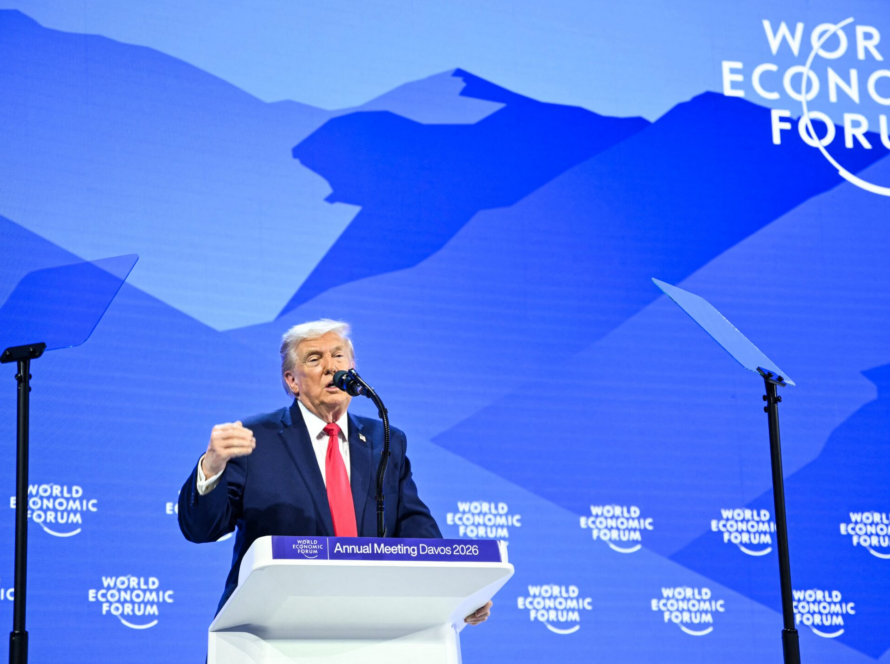
- The European response has been despairingly tepid. However, while European Union officials keep pointing the finger at Iran, even though it was Iran’s sovereignty which was violated, the response has been more nuanced from individual countries. These range from France and Switzerland, which have cautiously criticized the US, to Spain, which has been much more forthcoming. Surprising for a leader who spoke at Davos about a rupturing world order, Canadian Prime Minister Mark Carney has not only blamed Iran but also pledged support to the US. This only deepens the credibility gap between the West, or the Global North, and (much of) the Global South. Indeed, as one commentator puts it, it only shows that the Global North is unwilling to question the crumbling rules-based order.
- These responses show the extent to which the West genuflects to Trump. However, it is important to contextualize them individually. Countries like Ukraine, from which one could have expected a different response, have been very critical of Iran. We can ascribe various motives to their statements: Ukraine, for instance, may not be willing to upset the US too much at a point when the US seems to be abandoning Kiev. Remember its response to the Venezuela operation last January: Ukrainian President Zelenskyy even wished that Washington would abduct other dictators – which in his scheme would include Putin. By contrast, Canada’s and Australia’s remarks have been surprisingly predictable, post-Davos and even post-Greenland.
- The Global North has defended the US’s actions based on Iran’s “actions.” The Global South perceives the issue differently – not just in terms of Iran’s sovereignty, but also bread-and-butter issues like energy prices. The Sri Lankan government, for instance, has notified the public not to panic-buy fuel or gas. This is the general sentiment across Asia and Africa – as the statement by the African Union (AU)makes clear. The West has the luxury of being oblivious to such issues. We do not.
- South Asia is linked to these developments whether they like it or not. The region has stayed away from major escalations – except, of course, for last year’s standoff between India and Pakistan – but Pakistan’s recent declaration of war on Afghanistan and its attacks on Kabul and Kandahar have brought these military misadventures closer to home. Meanwhile, India is facing a quandary: just days after he visited Israel and made some remarks about relations between the two countries, Indian Prime Minister Narendra Modi has put out a statement which urges restraint on all sides. India sees an ally in both Israel and Iran: its strategic interests run deep in Chabahar Port, and it cannot let escalation derail those interests. How it balances this with its clear and present pro-Jerusalem tilt is debatable.
- Donald Trump wants to do away with the Tehran government, but does he want a restoration of the pre-1979 status quo? This is difficult to answer. The Venezuela operation was not followed by a “democratic transition” to another figure. There were several reasons, including Trump’s anger at not getting the Nobel Prize, which prevented him from reaching an arrangement with María Machado. No such rifts exist between him and the Pahlavi family. Indeed, for Israel, a restoration of the Pahlavis would be the ideal sequel to whatever Washington has planned for the current leadership. Whether Trump prefers this to engaging with a more malleable figure, even in the current regime, is left to be seen. Certainly, the killing of the Ayatollah goes a long way in achieving the Trump administration’s objectives, but what must be borne in mind is that Iran is not Venezuela, and that it is too far away even for someone like Trump to enforce his will easily.
- Donald Trump is hitting 80 years, and Netanyahu has just passed 76. This is just the latest round of wars and conflicts that angry old men seem to like ramping up. Trump has warned that American lives are at stake. “The lives of courageous American heroes may be lost,” he says, “and we may have casualties.” Unlike his predecessors, Trump does not cut corners and try to justify his actions: he calls it what it is and tries to get the job done, however abhorrent his means may be. That might be marginally better than the pretense of preserving international law while doing everything to undermine it – which is what powerful countries have always engaged in. Yet for a vast majority of people, not only in Iran but in countries like ours, it’s a thin line in a war that seems to be taking us further into a major conflagration.
Uditha Devapriya is an independent researcher and analyst who works at the intersection of history, politics, and geopolitics. He can be reached at udakdev1@gmail.com.
Factum is an Asia-Pacific-focused think tank on International Relations, Tech Cooperation, and Strategic Communications accessible via www.factum.lk.
The views expressed here are the author’s own and do not necessarily reflect the organization’s.