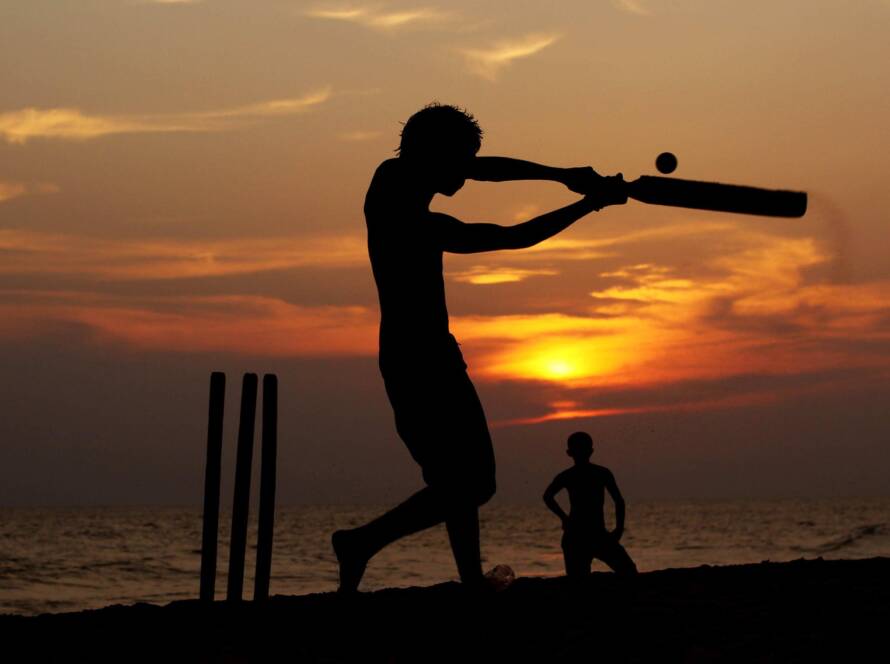
Cricket is portrayed as a gentleman’s game with a vision to ensure sportsmanship as the eventual winner. Incidents have occurred over the years in the game of bat and ball, testing the limits of sportsmanship and sparking debate around controversy.
Sports have long been used to advance political agendas, notably during the Cold War when the U.S. boycotted the 1980 Moscow Olympics and the Soviet Union responded by boycotting the 1984 Los Angeles Games. Likewise, the Balkan Wars made their way to the field when riots broke out in the 1990 football match between Dynamo Zagreb and Red Star Belgrade, marking the event as a significant moment in Yugoslavian politics. Many sports worldwide strive to keep politics off the field, except, of course, India vs Pakistan.
Suryakumar Yadav, the Indian T20I captain, was vocal about the rivalry between India vs Pakistan, at one instance stating that the “rivalry no longer applies,” playing down the hype around the contest. This statement comes after the Super 4 victory against Pakistan in the recent Asia Cup, which was one of the three encounters India won against their archrivals in the tournament in a dominant fashion. The Indian Men’s T20I captain remarked on the India-Pakistan encounter in the Women’s World Cup, urging stakeholders of the game to “stop asking questions about the rivalry.” According to him, a contest can be considered a rivalry if the competition is “neck to neck,” highlighting the Women’s team record of 12-0 against Pakistan in WODIs.
While the Indian captain might convince many perspectives looking at the recent performance and results, it certainly isn’t the case when it comes to the stances taken off the field and how the decisions made influence occurrences on the field, blurring lines between sports and political agenda.
Millennials, regardless of the country you were born in, at a certain point in 1999, your attention focused towards Jammu and Kashmir along with the rest of the world. The Kargil War was among the bloodiest clashes these two nuclear-powered giants witnessed. The Pakistani military crossed the Line of Control aiming to infiltrate the Indian-administered territory and take over the Kargil region to initiate negotiations with India. Plans went sour as Indian defence forces launched various operations to push the Pakistani military back to the LOC, resulting in the war raging from May to July, costing lives and resources of both nations.
The emotions of the war were not just limited to Ladakh, situated in the Kargil district. Thousands of miles away at Old Trafford, Manchester, two nations that were terrorized by the war wanted to make a statement. India and Pakistan met again amid the 1999 Kargil War, creating one of their fiercest World Cup clashes.
Prior to the game, the UK government declared the event “high security,” and thousands of security personnel were deployed amidst the tension. Indian players reportedly received letters from soldiers at the front line, urging them to “win for India,” and Pakistani cricketers were advised by their government to “play with dignity.”
The tension and emotions were high; the sportsmanship and the “spirit of the game” were threatened. The players confronted each other during the battle on the pitch, with the most notable encounters being the clash between Venkatesh Prasad and Aamir Sohail and interactions between Shoaib Akhtar and the Indian tailenders. India managed to claim victory by 47 runs, but it was more than a game through its showcase of how political and military tensions had rooted within cricket.
The players may have played for national pride, but did cricket win? After 1999, bilateral series and the Sahara Cup were cancelled, and what is usually a symbol of global peace became a puppet of war. The 2008 Mumbai terror attacks, which killed over 170 people, heightened political tension between India and Pakistan, ending all bilateral cricket, a ban that remains today. Other nations also refused to tour Pakistan, harming its cricket. The IPL, which began in 2008 with Pakistani players, banned them after the attacks. As Shoaib Akhtar said, “After the 26th of November, the bridge was burned. Politics took over cricket.”
Considering the statement he made, this was not just about India vs Pakistan anymore. This was about the vulnerability of the gentleman’s game to stand against political ideals and influence. Political tension and war bring chaos and suffering. But does sport, a place where people find solace, have to suffer as well?
The conversation about political impact in the game resurfaced again in the recently held Asia Cup in the UAE. The majority of the global fanbase of cricket laid their eyes on the India vs Pakistan clash because of tensions that grew in the last couple of months between the two neighbors.
On the 22nd of April 2025, a terror attack took place in Pahalgam, Jammu and Kashmir, taking the lives of 26 civilians who were mostly Indian tourists. India held militant groups operating from Pakistan and parts of Pakistan-occupied Kashmir responsible for the terror attack and accused the Pakistani government of providing the militants with “logistical support and arms.”
As a response, India conducted “Operation Sindoor” on the 7th of May, carrying out precision air strike operations aimed at terrorist infrastructure in Pakistan and Pakistan-occupied Kashmir. The diplomatic and military tension didn’t deescalate as cross-border shelling and counterfire followed, until a ceasefire was called, halting the clash.
The Asia Cup arrived at a tense moment, and cricket suffered again. In the group stage, the captains refused to shake hands or even look at each other. India won by 7 wickets, but the tension overshadowed the game.
The Indian team walked off the pitch refusing to shake hands with the Pakistani team. Suryakumar Yadav dedicated the win to the lives that were lost on the 22nd of April and to the Indian armed forces. The Pakistan Cricket Board protested, lodging complaints against the match referee relating to the “miscommunication about the handshake” and lodged complaints to the ICC simultaneously regarding the comments made by Yadav as “political.”
If we look at the bigger picture, this was not about Asian teams battling it out on the pitch to show supremacy, but a war between two nations that could not be solved through guns and bullets. Both teams expressed their stances throughout the tournament, with several Pakistani players making provocative gestures referencing the 22nd April clashes.
During the trophy presentation, the Indian team refused to accept the trophy and medals from Mohsin Naqvi, the ACC Chairman and PCB Chief, due to his prior criticism of them. India later requested the official trophy, and Naqvi said it could be collected from ACC headquarters in Dubai. Many saw this as a childish standoff between the cricketing bodies.
What followed in the 2025 Asia Cup brought the attention of many advocates in sports and, according to some, what unfolded in the tournament between the two sides was “unsportsmanlike conduct” and “politics eclipsing the game.”
PM Narendra Modi went on to post on X after the finals: “Operation Sindoor on the games field. Outcome is the same – India wins! Congrats to our cricketers.”
While several prominent figures such as Shashi Tharoor, member of the Lok Sabha, claimed, “India shook hands with Pakistan even during the Kargil War” and “the spirit of the game should be kept separate from politics and military conflict.”
This rivalry had delivered its moments. But it also acted as a beacon for hidden agendas and political statements tarnishing the spirit of the game. It’s hard to assign blame to just one side; both nations share responsibility. Political interference overshadowed the clash, and as fans, we once assumed it only added to the excitement. We were wrong, and now the issue has reached its peak. But the question still lingers in the minds of the fans and the advocates of the game: “Are we yet to see more?”
If we are, the majority would hope that it will deliver a story about the runs and wickets and not regarding the off-field noise, destroying nations and corrupting the beauty of sports and branding this clash as a “rivalry beyond the pitch.” If we were to use the global stage as a platform to demonstrate a battlefield, is there a need for the relevant equipment and accessories? Why not use guns and other methods of violence?
No matter how tense situations get, diplomacy has no place on the field. People may suffer from political decisions, but sports like cricket are meant to promote peace and unity.
India and Pakistan might have another chapter ahead on the cricketing field. But many would hope this time, it is about the performance and not about the stance.
Like the great Brazilian football legend, Pelé, once said: “Sport is something that should unite people, not divide them. When politics enters the game, it stops being sport.”
Minidu Amarasekara, a Bachelor of Commerce graduate, is passionate about sports and how athletic competition, discipline, and teamwork shape global perspectives, influence cultures, and inspire meaningful shifts in individual and collective worldviews.
Factum is an Asia-Pacific-focused think tank on International Relations, Tech Cooperation, and Strategic Communications accessible via www.factum.lk
The views expressed here are the author’s own and do not necessarily reflect the organizations.