By Lavanga Derangala
The X-Press Pearl maritime disaster off the coast of Colombo in 2021 continues to provoke serious legal, environmental, and political questions, especially surrounding the controversial decision to pursue civil litigation in Singapore rather than in Sri Lanka.
While the Supreme Court of Sri Lanka delivered a historic ruling in a Fundamental Rights case, awarding $1 billion in compensation, legal experts, environmentalists, and civil society members are now voicing concern that the country may have missed a critical opportunity to claim a significantly larger sum through a properly filed civil case within its own jurisdiction.
The Supreme Court’s FR judgment, delivered on July 24, 2024, found that the failure of authorities to take preventive action against the fire and subsequent environmental damage caused by the X- Press Pearl constituted a violation of the fundamental rights of the Sri Lankan people.
This landmark ruling, which is final and cannot be appealed to any international or arbitral tribunal, ordered the payment of $1 billion in compensation for the widespread environmental destruction and economic losses sustained. This is now considered the largest compensation award in Sri Lanka’s legal history for an environmental case.
However, despite this significant outcome, the broader legal approach adopted by the government particularly the decision to file the civil case in Singapore, remains under fire.
The civil litigation strategy, managed by the Attorney General was pursued in Singapore courts despite serious objections from legal experts and a government-appointed expert committee. According to those familiar with Singapore’s legal system, the chances of securing substantial compensation through its civil courts are slim, mainly due to liability limitations and international legal caps established under maritime law conventions.
As noted by legal analysts, Singapore is bound by international maritime treaties that restrict the level of compensation that can be claimed in such cases. In contrast, if the civil case had been filed in Sri Lanka, the legal framework would have allowed for broader claims and potentially higher damages based on local law and full jurisdiction.
The X-Press Pearl sank just four to five nautical miles off Sri Lanka’s coast, well within the country’s 12 nautical-mile territorial waters. Legal experts have repeatedly stressed that Sri Lanka clearly had sovereign jurisdiction over the area and thus strong legal grounds to hear the civil case domestically.
A three-member expert committee consisting of President’s Counsel Chandaka Jayasundara, President’s Counsel Ronald Perera and Attorney-at-Law Dan Malik Gunasekara, along with several government officials and maritime law experts, strongly advised against transferring the civil case to Singapore. Their recommendation was that Sri Lanka, by filing the civil action domestically, could ensure not only proper jurisdiction but also a stronger chance of receiving a fair and substantial award in line with the scale of the disaster.
Critics argue that the current approach exposes Sri Lanka to significant legal and procedural risks. If the shipping company refuses to comply with the Singapore court’s eventual order for compensation, the Sri Lankan government may be forced to initiate asset seizure proceedings, starting with whatever property the company owns in Sri Lanka.
If those assets prove insufficient, the state would then have to pursue international litigation to seize assets in other countries. This path could be lengthy, legally complex and financially burdensome, ultimately delaying environmental restoration and victim compensation.
Complicating matters further, an insurance company filed a parallel case in an English court concerning certain containers aboard the X-Press Pearl. That court capped the maximum compensation for total damages at 19 million euros, about $25 million.
Both England and Singapore are parties to the 1996 Protocol of the Limitation of Liability for Maritime Claims (LLMC), which enforces a ceiling on financial liability in such maritime cases. Due to this treaty, the English court’s judgment has had a direct effect on the Singapore case, which has now been temporarily stayed.
Sri Lanka cannot claim anything above the $25 million limit in Singapore unless it formally appeals the English decision. However, the Attorney General has yet to file such an appeal.
This delay in challenging the English court ruling has only deepened the frustration among experts and the public. Until the English decision is overturned or successfully appealed, the potential compensation from the Singapore court remains legally capped. As a result, Sri Lanka cannot expect more than $25 million in civil damages, despite incurring losses that far exceed that amount.
This situation has sparked outrage across legal and environmental sectors. Two official expert reports have estimated the environmental and economic damage caused by the X-Press Pearl disaster at $1.8 billion and $6.4 billion, respectively. Some independent analysts believe the long-term cost may exceed $15 billion, once marine biodiversity loss, fisheries collapse, and ecological rehabilitation costs are fully accounted for. These figures starkly contrast with the current legal ceiling imposed on the Singapore case.
While the Supreme Court’s $1 billion award in the FR case is a significant achievement, legal scholars point out that such cases are inherently limited in scope. A Fundamental Rights case focuses on constitutional violations, not extensive civil damages backed by full evidence, witness examination and scientific data.
Experts argue that had the government initiated a full civil lawsuit in Sri Lanka, armed with expert reports, environmental assessments and testimony from affected communities, the damages awarded could have vastly exceeded the FR compensation.
This misstep in legal strategy has prompted many to ask: why wasn’t the civil suit filed in Sri Lanka? Who made the decision to pursue it abroad, and what was the underlying rationale? Members of the expert committee and other specialists have expressed their deep disappointment with the process, stating that they even wrote letters to Parliament warning against the decision to go to Singapore. These appeals were seemingly ignored.
There is growing concern among the legal and environmental communities about whether this decision was influenced by external pressure, commercial interests or a fundamental misunderstanding of legal jurisdiction. With national interest at stake, many argue that full transparency and accountability are required to restore public trust in the state’s legal handling of one of the most serious maritime disasters in Sri Lanka’s history.
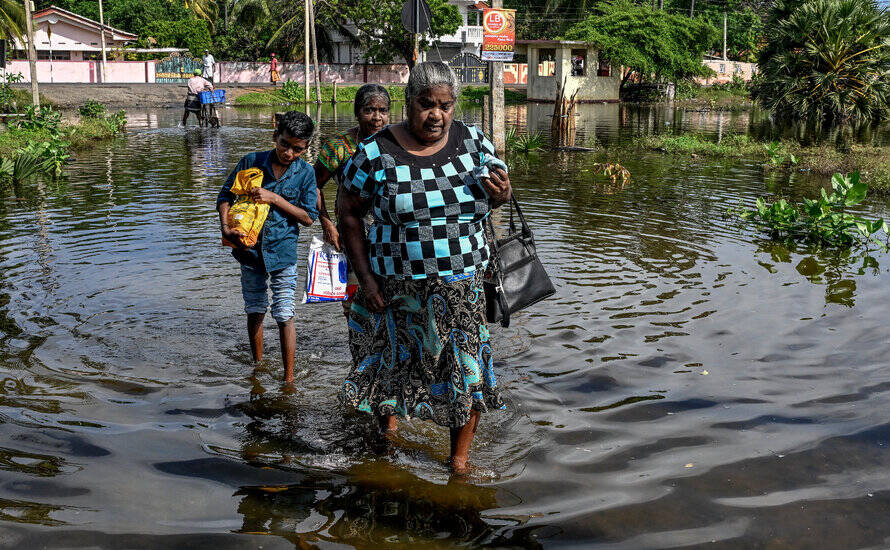
The X-Press Pearl incident inflicted catastrophic damage on Sri Lanka’s marine and coastal environments. Entire stretches of coastline were polluted. Marine life was decimated. Fishing communities were economically crippled. Given the scale of destruction, many believe that every legal avenue should have been exhausted to secure the highest possible compensation, not only to restore what was lost, but also to set a precedent for holding polluters accountable in the future.
Unfortunately, the current situation leaves Sri Lanka legally constrained, financially limited and with many unanswered questions. Unless immediate corrective steps are taken such as appealing the English court decision and re-evaluating the international litigation strategy, Sri Lanka may walk away from this disaster with far less compensation than it justly deserves.
Lavanga Derangala is a second-year law student at the University of Colombo. Her interests lie at the intersection of geopolitics, law, art and culture, history, and political science.
Factum is an Asia-Pacific-focused think tank on International Relations, Tech Cooperation, and Strategic Communications accessible via www.factum.lk
The views expressed here are the author’s own and do not necessarily reflect the organization’s.