By Dulmi Thimansa
Sri Lanka is still grappling with one of its worst economic crises in years and the focus is on fiscal reforms, debt restructuring and economic stabilisation. But lurking silently in the background is yet another challenge. Climate monitoring centers globally have signalled that El Niño conditions are likely to form in the second half of 2026, which could cause disturbances in the rainfall, crop production, water supplies and energy sectors.
El Niño might seem at first glance to be a meteorological phenomenon. But its repercussions go beyond weather predictions. Governments around the world are increasingly aware of the impact of climate variability on economic growth, food security, public health, infrastructure and social stability. Countries like Sri Lanka which are heavily dependent on climatic factors for their critical sectors can see an El Niño as a major national problem.
The emergence of El Niño in 2026 therefore presents an important opportunity to examine a broader question: how resilient is Sri Lanka to climate-related shocks in an era of increasing environmental uncertainty?
Understanding El Niño: Why Events in the Pacific Matter to Sri Lanka
El Niño is a component of a natural climate cycle, called the El Niño-Southern Oscillation (ENSO). It is the result of a marked rise in the sea surface temperatures of the central and eastern Pacific Ocean. This warming is located thousands of kilometres away from Sri Lanka but it affects the circulation patterns in the atmosphere.
The effects of El Niño vary from region to region. There are some countries that are affected by severe droughts and others that are affected by excess rainfall, floods, or abnormally high temperatures. El Niño has historically been linked to breakdown of monsoon patterns and alterations of monsoon rainfall in South Asia.
For Sri Lanka, the relationship between El Niño and weather conditions is complex. Strong El Niño events have often coincided with reduced rainfall during critical agricultural periods, but the impacts are not always consistent. What remains clear, however, is that El Niño tends to increase climate variability and reduce predictability.
But this uncertainty is a critical factor too, as a number of economic and social systems in Sri Lanka rely on fairly regular weather patterns. Seasonal rainfall is the basis for the farmers’ crop planning. Predictable inflow of monsoon is vital for reservoir managers. Low water levels are needed for hydropower generation. Stable water supply and infrastructure are vital to communities.
Consequently, El Niño should not be viewed simply as a weather event. It is better understood as a risk multiplier capable of amplifying existing vulnerabilities across multiple sectors.
Why the 2026 El Niño Matters
The effect of the forecasted 2026 El Niño is not just about the potential for drought or extreme weather – it is also in the context of what is happening. Sri Lanka continues to be in a time of economic recovery. Public finances are still limited, cost of living remains a challenge for households and a number of sectors are still recovering from recent economic and social hardships. The country’s shock absorption capability is constrained in such a case.
Today’s environmental disruption, which may be related to climate change, can therefore have repercussions beyond environmental impacts. Food inflation may be a result of reduced agricultural production. Reduced hydropower production may lead to higher energy prices. The livelihoods and industrial operations may be impacted by water shortages. All of these disruptions could put extra stress on a vulnerable economy.
Additionally, climate scientists have up until now been sounding alarm about how climate phenomena like El Niño could be exacerbated by climate change. El Niño is not a direct effect of climate change, but climate change can make El Niño events worse by inducing more heatwaves, changing rainfall trends and making the impacts of climate change more severe. The 2026 event is thus not just a fleeting weather quirk. It provides a window into the type of climate change issues that countries may be increasingly experiencing in the future.
The real challenge for Sri Lanka is Climate Variability
The word drought tends to be the topic of public discussion of El Niño. This can, however, make the threat seem very simple. The greater challenge for Sri Lanka is not necessarily reduced rainfall alone but increasing climate variability. In recent years, the country has experienced a series of extreme weather events, including floods, landslides, prolonged dry periods, and unusually high temperatures. These events have often occurred within short timeframes, demonstrating the growing volatility of weather patterns. Climate scientists increasingly refer to this phenomenon as “climate whiplash” – rapid transitions between contrasting extremes.
This volatility presents planning and decision making difficulties. When rains are unpredictable, farmers can find it difficult to make planting decisions. It can be difficult for water authorities to reconcile reservoir management goals. Buildings that are resilient to a given climate risk could be vulnerable to a different one.
Economically, it is also important. There is more uncertainty in the business world, premiums may increase, and governments may need to put more resources into disaster management and recovery. El Niño in this context reminds us that the climate change threat that Sri Lanka will have to face in the future is not just about warmer temperatures or less rain. It is a challenge to deal with uncertainty in a system, which has been accustomed to relatively predictable environmental conditions.
Interconnected Risks: Food, Water, and Energy Security
The interdependencies of El Niño impacts are one of the reasons why it is important for policy attention. One of the first sectors that are impacted during shifts in rainfall is agriculture. Lower precipitation is likely to result in lower yields, delayed planting, and higher production expenses. The loss is immediate for farmers, and is felt throughout the economy. A lower yield can cause food shortage, importation and price hikes in the country.
Water security is a similar challenge. Multiple uses can be achieved from Sri Lanka’s reservoirs including irrigation, potable water supply, and electricity generation. As water becomes scarce, there are difficult decisions to make. Allocation arrangements become more complicated as water becomes scarcer, especially in the midst of drought.
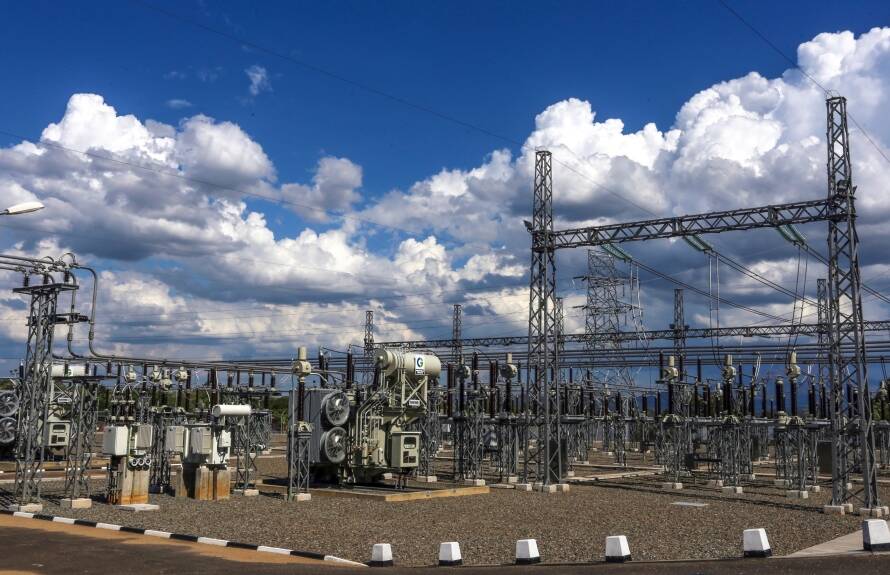
This is closely related to the energy security issue. The contribution of hydropower is still high in the electricity generation mix of Sri Lanka. Lower reservoirs levels could lead to more reliance on thermal generation, which could lead to more imports from overseas, and put the country at risk from overseas energy market movements.
This is tightly coupled with energy security. Hydropower continues to play a key role in the Sri Lankan power generation portfolio. Lower reservoir levels might necessitate higher reliance on thermal power generation, which could lead to higher fuel imports and make the country more vulnerable to fluctuations in the external energy markets.
What makes these challenges particularly important is that they are interrelated. No single sector will be impacted by a decrease in rainfall. Rather, it has cascading impacts on food, water, energy, public finances, and household welfare. This is the interdependence that is exemplified by climate resilience, and this interdependence should not be viewed solely as a concern of the environment. It has a basic connection to economic resilience and national development.
What El Niño exposes Sri Lanka’s development model
Maybe the most significant one to take from the developing El Niño is the overarching concept of vulnerability. Natural hazards do not necessarily result in disasters. They are very dependent on the strength of the systems that they affect. Drought is a national crisis if water infrastructure is not adequate. In the absence of adaptive capability of the agricultural systems, food insecurity intensifies. When there is a lack of alternative generation sources, energy shortfalls disrupt.
El Niño is therefore a reflection not so much of the climate as of the strength and weakness of national climate systems. The dynamics of natural environment-human interaction have been a central feature of Sri Lanka’s development journey from time immemorial. Agriculture, hydropower, tourism and water management are still highly dependent on climatic conditions. This dependency has brought about economic opportunities but also vulnerabilities.
The implications of the expected El Niño bring pertinent questions into the lens of whether the current infrastructure, planning processes and institutions are ready to meet the challenges of a climate of increased uncertainty.
These questions are not unique to Sri Lanka. Around the world, governments are increasingly reassessing how climate risks affect economic planning, national security, and development policy. Climate resilience is becoming a strategic priority rather than a niche environmental issue.
Climate Resilience is a strategic priority
The overall pattern is evident, whether the 2026 El Niño ends up being weak or strong. It is likely that climate variability is a phenomenon that will dominate the next few decades. This is the point where resilience is no longer just about disaster management, for Sri Lanka. Rather, it needs to be embedded in economic planning, infrastructure projects, farm policy, energy policy and public investment.
Building resilience involves more than responding to individual climate events. It needs to build the capacity of institutions, infrastructure and communities to resist a variety of shocks. It also demands understanding that climate risks are becoming more and more a determinant of economic competitiveness, social stability and national security.
The countries that are best able to adjust to these realities will have a better chance to preserve their development results and maintain long-term growth. Those who are not flexible are likely to end up reacting to crisis situations that are increasingly expensive and disruptive, again and again.
Conclusion
The emerging El Niño is not simply a scientific phenomenon to be monitored by meteorologists. It is a reminder of the growing importance of climate resilience in an increasingly uncertain world.
For Sri Lanka, the significance of El Niño lies not only in its potential impacts on rainfall, agriculture, or water resources. More importantly, it highlights the country’s continuing exposure to climate-related risks and the need to strengthen resilience across critical sectors.
The true measure of preparedness will not be whether El Niño occurs, but how effectively Sri Lanka manages its consequences. As climate variability becomes a more prominent feature of the global environment, resilience must become a central component of national planning and development strategy. Ultimately, the greatest lesson of El Niño may be that the future of national security is increasingly intertwined with the future of climate resilience.
Dulmi Thimansa holds an LLB from Staffordshire University and has a keen interest in international relations and law. Her research focuses on global affairs, digital governance, and the intersection of technology and society.
Factum is an Asia-Pacific-focused think tank on International Relations, Tech Cooperation, and Strategic Communications accessible via www.factum.lk.
The views expressed here are the author’s own and do not necessarily reflect the organisation’s.